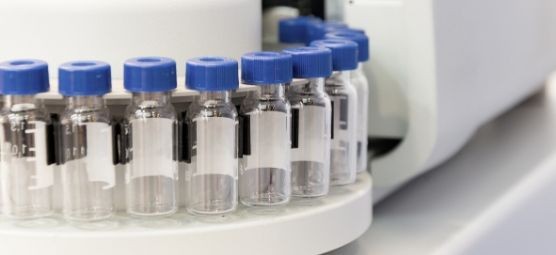
Mass spectrometry was developed in 1919 by physicist Francis Aston. The goal of Aston’s research was to find a way to separate atoms efficiently. In general, mass spectrometers are relatively simple to use. The lab technician merely inserts the substance into the machine’s chamber, which then overwhelms the atoms with electrons and turns the atoms into ions—formally called ionization.
Once the ionization process is complete, the ions rapidly exit the chamber and enter an electric field, which accelerates the ions at various speeds. The faster ions indicate a higher electrical charge, which allows the lab technician to separate the substance accordingly. The electrically charged ions then enter a magnetic field and curve according to their charge. Stronger-charged ions will bend more dramatically than lesser-charged ions.
It’s important to have a general understanding of how mass spectrometry works before learning how it helps everyday life for millions of people around the world. Below, our experts discuss the many applications of mass spectrometry. Read on to learn more.
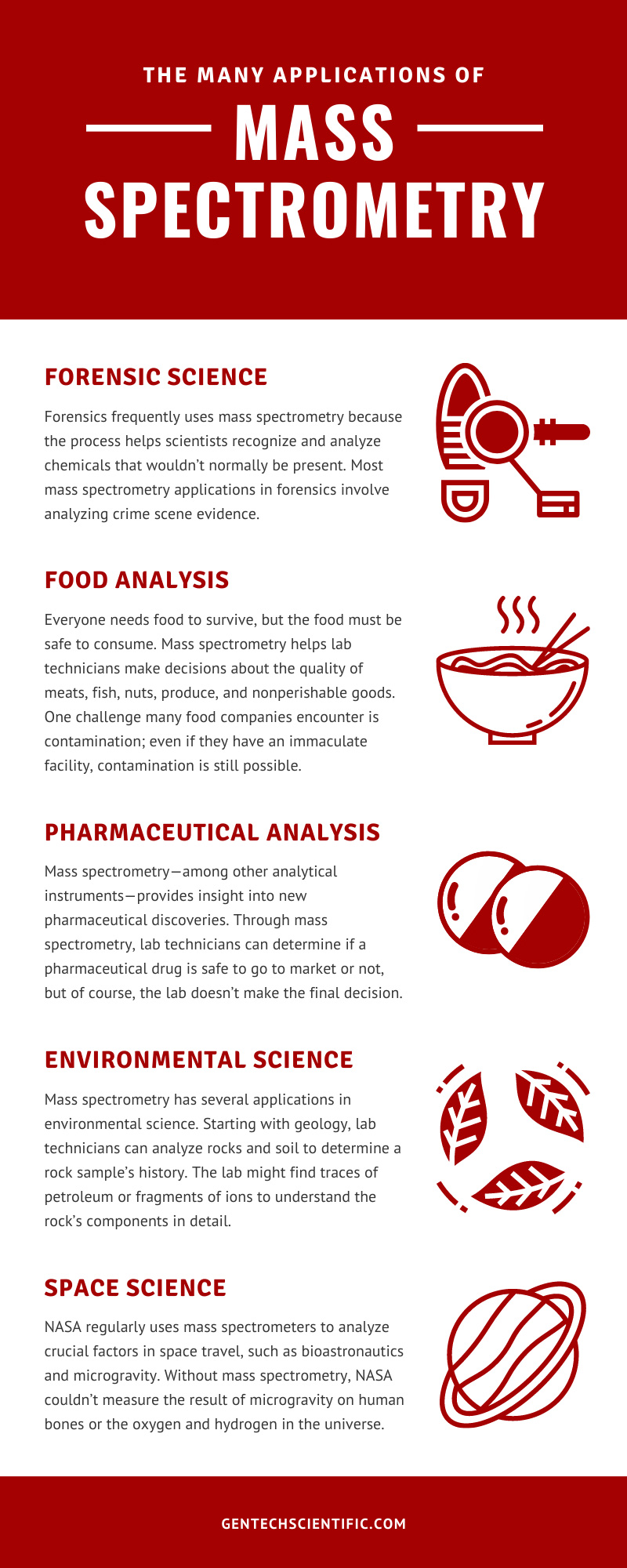
Forensic science
Forensics frequently uses mass spectrometry because the process helps scientists recognize and analyze chemicals that wouldn’t normally be present. Most mass spectrometry applications in forensics involve analyzing crime scene evidence. The lab technician can analyze, for example, small particles from the fibers in carpeting to make an educated decision against a criminal. Additionally, mass spectrometers are among the best tools to use during an arson investigation. By collecting samples from the presumed arson crime scene, forensic scientists can use mass spectrometry to determine if there was a fuel source in the debris. Furthermore, mass spectrometry is one of several analytical instruments used to develop a toxicology report that can help officials determine if foul play has taken place.
Food analysis
Everyone needs food to survive, but the food must be safe to consume. Mass spectrometry helps lab technicians make decisions about the quality of meats, fish, nuts, produce, and nonperishable goods. One challenge many food companies encounter is contamination; even if they have an immaculate facility, contamination is still possible. Mass spectrometry helps lab technicians identify contamination from factors such as pesticides in produce or spoilage in meat and fish. Furthermore, mass spectrometers are one of the analytical instruments used to determine the nutritional quality of food. Mass spectrometry—often paired with liquid chromatography—allows lab technicians to identify food’s nutritional makeup, such as proteins and vitamins.
Pharmaceutical analysis
Because mass spectrometry measures the molecular weight of a particular substance or compound, technicians in pharmaceutical labs frequently use mass spectrometry to determine the molecular formula in pharmaceutical drugs. Additionally, mass spectrometry—among other analytical instruments—provides insight into new pharmaceutical discoveries. Through mass spectrometry, lab technicians can determine if a pharmaceutical drug is safe to go to market or not, but of course, the lab doesn’t make the final decision. Before any pharmaceutical drug reaches the general market, the FDA requires numerous tests and a thorough report that includes data proving the drug works as advertised. That said, mass spectrometry is vital in the early stages of pharmaceutical development because it allows scientists to proceed with the preclinical development phase. With the aid of mass spectrometers, lab technicians can proceed with pharmacokinetic analyses, metabolite screening, and any tests required by the FDA.
Environmental science
Mass spectrometry has several applications in environmental science. Starting with geology, lab technicians can analyze rocks and soil to determine a rock sample’s history. The lab might find traces of petroleum or fragments of ions to understand the rock’s components in detail. Additionally, mass spectrometry is common in agricultural applications to assess the quality of a farm’s soil, in addition to testing and quantifying pesticides. Furthermore, scientists can analyze the purity and components of drinking water on a commercial level to ensure it meets FDA regulations. Finally, modern mass spectrometers are complex enough to determine and measure the isotopes in solar wind. Although mass spectrometry is a common method to measure the environment and atmosphere on Earth, officials don’t restrict mass spectrometry to Earth.
Space science
NASA regularly uses mass spectrometers to analyze crucial factors in space travel, such as bioastronautics and microgravity. Without mass spectrometry, NASA couldn’t measure the result of microgravity on human bones or the oxygen and hydrogen in the universe. Furthermore, with mass spectrometry, NASA was able to analyze Saturn’s atmosphere, including vital factors such as oxygen and toxins on the planet. But Saturn wasn’t the first planet NASA explored. In the 1970s NASA launched the Viking Project, the United States’ first mission in which they successfully landed a spacecraft on Mars. One of the outcomes of the Viking Project allowed NASA to successfully analyze Martian soil.
In other words, it’s safe to say there are many applications of mass spectrometry. Whether you’re working for NASA, at a pharmaceutical company, in a research university, or in a forensic science lab, you’re going to use mass spectrometry frequently. But mass spectrometry doesn’t only apply to the individuals operating the machines; everyone on the other side of the machine benefits from it too. For instance, people want to know the food they consume is safe and the nutrition labels are accurate, and mass spectrometry gives them peace of mind. We all depend on mass spectrometry one way or another, and if you’re the manager of a lab, you know how important having quality equipment is. Unfortunately, many analytical instruments are very expensive and laboratories find themselves either purchasing low-quality equipment to save money or not purchasing the equipment at all.
A laboratory is no place to pinch pennies, but we recognize the reality of working within a budget. The best way to get the high-quality equipment that your lab needs without breaking the bank is by going with certified refurbished equipment from GenTech Scientific. We believe in science and research, and we also believe in fairly priced equipment. If you’re looking to buy a mass spectrometer, chromatography machine, or accessories, or you need service, we’ve got you covered. Additionally, if money is an issue right now, we offer competitive financing options to help you your lab do great work. Our refurbishing technicians bring the machines back to life as if they had just left the factory. Lastly, because refurbishing is done in house, we can provide personalized customer service and support because we personally work on each machine. If you have any questions or would like to request pricing, contact our team today, and we’ll be happy to help.