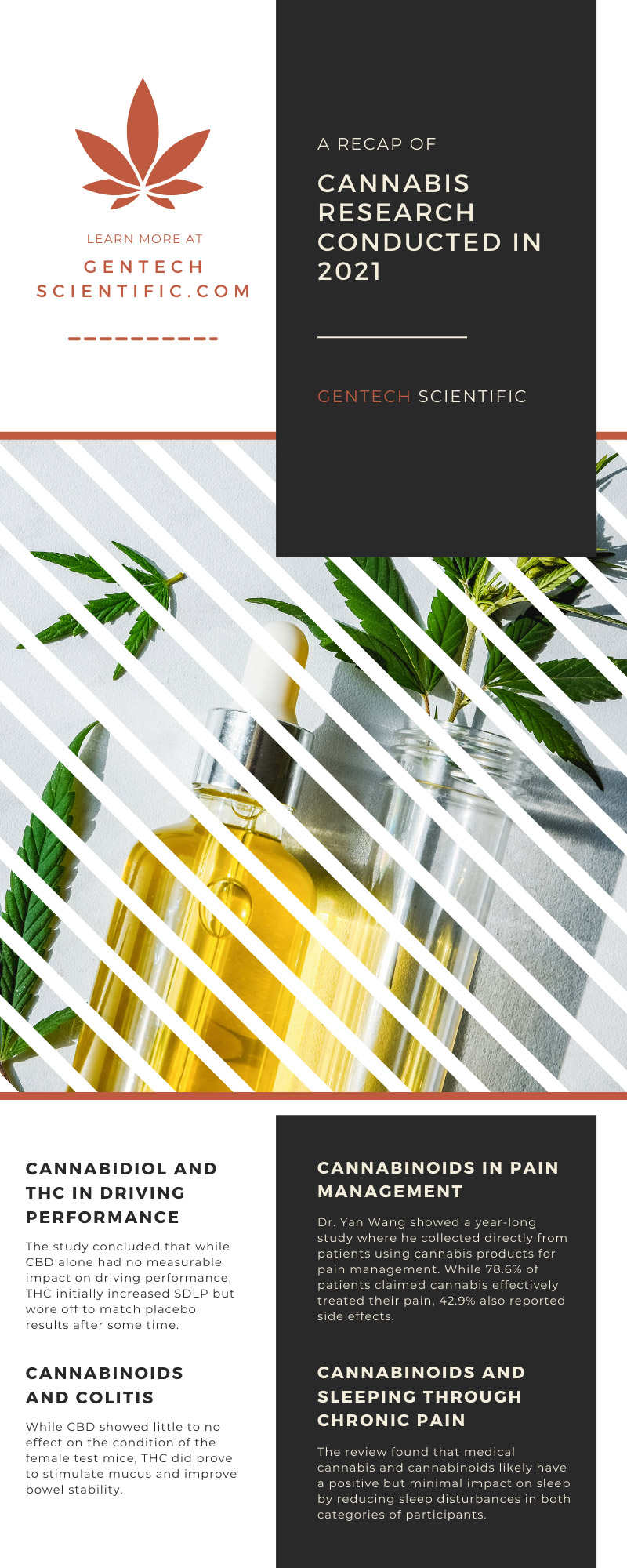

Each year, researchers worldwide work to better understand the human relationship with cannabis. Much of their cannabis research focuses on cannabis’ pharmaceutical potential and its safety of use both medically and recreationally. The following is a recap of cannabis research conducted in 2021 and industry discussions that continue to impact the field into 2022.
The 2021 CCORC
In June of 2021, the first Cannabis Clinical Outcomes Research Conference (CCORC) presented virtually. This conference featured keynote speakers and panelists from the industry discussing recent findings and providing a forum for industry professionals to identify problems and seek solutions. The conference proceedings were later detailed online and remain available through open access to researchers and industry members awaiting the next CCORC in 2022.
Improving Cannabis Research Efficacy
During the CCORC, various keynote speakers took the stage to explain both research findings and current field challenges. In his presentation of “Clinical Trials of Cannabis in Cancer and Sickle Cell Pain: ‘Not As Easy As It Looks’!”, Dr. Donald Abrams explored the roadblocks and problems facing cannabis research in 2021. Funding, participants, and product accessibility are listed issues that gave ongoing studied limitations and delays. Dr. Abrams recommends first implementing improved methods for finding and enrolling study participants. He also suggests a push for giving researchers more access to a range of cannabis products, including those currently on and entering the market.
Cannabinoids in Pain Management
Medical cannabis is known in part for its ability to provide pain management, with THC serving a significant role, and terpenes possibly aiding in pain management as well. However, the Director of Cannabis Research Initiative at the University of California Los Angeles, Dr. Ziva Cooper, expressed that more in-depth studies are still needed. Dr. Cooper also emphasized the importance of connecting specific cannabis components to their resulting health outcomes in ongoing and future research.
In the same discussion, Dr. Yan Wang showed a year-long study where he collected directly from patients using cannabis products for pain management. While 78.6% of patients claimed cannabis effectively treated their pain, 42.9% also reported side effects.
Cannabis Product Policy
During her keynote speech “Cannabis Science vs. Policies: Reconciling the Disconnect,” Dr. R. Loraine Collins discussed the current and potential future impact of further legalization and exploration of medical cannabis on patients in need of pain treatment. She emphasized a lapse between current policy and research, and proposed that the research industry push harder to stay in time with policymakers in order to provide more accurate public safety information and improved evidence-based policy.
Clinical Trials
Clinical trials are a constant as the government, the public, and commercial industries continue to seek more information regarding cannabis usage and safety. These trials often explore the effects of THC, CBD, and placebos on both daily life and medical treatment. The goal is to gain a well-rounded understanding of ingestible products, and the impact cannabinoids have on our daily lives while striving to discover any treatment potential cannabis presents.
Cannabidiol and THC in Driving Performance
A randomized clinical trial accepted for publication in late 2020 made the rounds online in 2021 for further discussion. This study, funded by the Lambert Initiative for Cannabinoid Therapeutics at the University of Sydney, used THC-dominant, CBD-dominant, and placebo cannabis to determine if cannabis use presented a crash risk for users when driving. A THC/CBD option was also used in the double-blind study.
Participants used randomized cannabis substances before performing a driving test with a goal of maintaining a standard deviation of lateral position (SDLP) from the lane boundary. The study concluded that while CBD alone had no measurable impact on driving performance, THC initially increased SDLP but wore off to match placebo results after some time.
Cannabinoids and Colitis
Another study from the University of South Carolina in 2021 looked at mice to determine why THC had an improving effect on colitis, or irritable bowel syndrome (IBS). While CBD showed little to no effect on the condition of the female test mice, THC did prove to stimulate mucus and improve bowel stability. The research also concluded that the anti-colitic THC effects were independent of the gut microbiome and activated cannabinoid receptors to improve conditions.
Cannabinoids and Sleeping Through Chronic Pain
Finally, a substantial systematic review of over 5,000 participants with affiliations in McMaster University, University of Western Ontatio, and Ryerson University sought to explore the impact of cannabis on impaired sleep. The majority of participants live with chronic cancer or chronic pain with the potential to cause sleep disturbances. The review found that medical cannabis and cannabinoids likely have a positive but minimal impact on sleep by reducing sleep disturbances in both categories of participants.
Cannabis Research Moving Into 2022
As more and more governmental bodies tackle the regulation of cannabis products, the need for further research continues. More interest in the subject of cannabis use in academic, consumer, and medical settings, as well as policy adjustments across the country, opens doors for new studies.
However, as more people engage with all aspects of cannabis and experience the effects of products new to the market, sudden, specific regulation is a risk looming over the industry. For example, consumers and researchers alike must continue to keep an eye on Texas’ Delta 8 THC regulation and policies as the legal battle for its use continues.
Overall, the key speakers of the CCORC believe that the field of cannabis research can make the most progress when policy, public health messaging, and public interests align in support of comprehensive, unbiased studies. The cannabis research of 2022 will likely follow in 2021’s footsteps by expanding our knowledge of not only what conditions cannabis can treat, but also how safe and effective the specific components of cannabis are for consumers. Recreational users and patients alike undoubtedly have more discoveries and information to look forward to in the years to come.
This recap of cannabis research conducted in 2021 suggests an ongoing need for progress in the field. If you are joining the effort and starting a cannabis analysis lab, our team at GenTech Scientific is here to help. For the last 25 years, we have provided refurbished and certified cannabis testing equipment for labs across the country. Reach out today to get a quote for your lab’s cannabis start-up instrument package, and enter 2022 with the right tools and service team to get the job done.